What if I told you that some of your prayers never made it past the ceiling of the room where you knelt? Not because God stopped loving you. Not because He is angry or distant. But because, at some point in your life, without realizing it, you picked up a few small prayer habits — habits that, according to the Bible, can silently close the ears of heaven.
Almost every believer is making at least one of these mistakes right now. In this article, I’ll reveal the 7 prayer mistakes that can keep God from hearing you: seven silent mistakes that turn our most sincere words into echoes that never reach the throne of grace. And pay close attention to number 4, because it is the most common of all. But don’t stop at number 5: it is the most neglected instruction about prayer in all of Scripture, and it completely changes how prayer works.
And there’s a promise: at the end of this reading, you will find a short, simple, powerful prayer that addresses each of these seven points. When you reach it, stop everything and pray it out loud if you can — because this text wasn’t made just to inform. It was made to lead you into an encounter.
⚡ QUICK SUMMARY — the 7 prayer mistakes that keep God from hearing you: 1) Praying without faith • 2) Cherishing sin in your heart • 3) Praying with wrong motives • 4) Unforgiveness (the most common!) • 5) Praying without listening to God • 6) Turning a deaf ear to God’s voice • 7) Giving up too soon. Every mistake has a fix — and at the end of this article there’s a prayer that closes the seven doors.

Let me describe a scene you might recognize. A woman kneels beside her bed at midnight. The house is silent. Her words come slowly at first, then faster, then heavier. She prays for her son, who has drifted away from God. She prays for her health, for the bills stacked on the kitchen table, for the fear that visits her every night when the lights go out. And when she finally says amen, she opens her eyes and whispers the question she would never dare ask out loud at church: Does God really hear me?
Have you ever felt that? That empty silence after a prayer? The feeling that your words went up and nothing came back? If the answer is yes, this message was made for you — because that silence may not be distance. It may be one of these seven prayer mistakes. Unanswered prayer has causes the Bible reveals with clarity — and these mistakes are the first thing to examine. And here’s the good news: each one of them can be fixed starting today.
🎥 Prefer to watch? This message was also recorded on video, with all 7 mistakes explained in depth. Watch the full video here.
Mistake 1 — Praying without faith
The book of James says something that should make us stop and think: whoever asks God for something must do it in faith, without doubting, because the one who doubts is like a wave of the sea, driven and tossed by the wind — and that person should not expect to receive anything from the Lord (James 1:6-7). Hebrews goes even further: without faith it is impossible to please God, because whoever comes to Him must believe two things: that He exists and that He rewards those who earnestly seek Him (Hebrews 11:6). Faith is not a nice detail in prayer. Faith is the door. Without it, the door stays shut.

But be careful, because this is where many people get hurt by religion: there is a difference between weak faith and entrenched unbelief. Weak faith is the faith of the father in Mark 9, who brings his tormented son to Jesus and cries out: “I believe! Help my unbelief!” That man’s faith was small, fragile, mixed with fear — and what did Jesus do? He healed his son. God is never offended by honesty. If your faith feels the size of a mustard seed, bring that mustard seed to Him: Jesus Himself said that kind of faith can move mountains.
The mistake is something else. The mistake is praying with your mouth while your heart has already decided the answer will be no. You pray for healing while mentally rehearsing the worst diagnosis. You pray for provision while trusting your paycheck more than the Promise. You pray for your family while inwardly declaring that people never change. See? Your lips ask God for bread, but your heart already calls Him a liar. That’s not humility — it’s doubt disguised as caution.
Remember Peter in Matthew 14. He saw Jesus walking on the water and asked: “Lord, tell me to come to you on the water.” Jesus said a single word: “Come.” And Peter got out of the boat — an ordinary fisherman, in the middle of a storm, held up by nothing but Jesus’ word. But then he saw the wind, looked at the waves, and began to sink. And Jesus, as He grabbed him, asked: “You of little faith, why did you doubt?” Not “why did your faith run out” — “why did you doubt?” Faith had gotten him out of the boat. It was looking at the waves that sank him.
So reflect: when you pray, where are you looking? At the size of the problem, or at the greatness of your God? Having faith in prayer doesn’t mean pretending the storm is small. It means looking at the storm and saying: “My Father is bigger.” God doesn’t ask for perfect confidence — He asks for a heart that, even trembling, turns to Him and says: “I know who You are.” That is the first key that opens the ears of heaven.
✅ How to fix mistake 1: pray declaring who God is — take your eyes off the waves, fix them on the Father, and say out loud: “I know who You are.”
Mistake 2 — Cherishing sin in your heart
David wrote one of the most striking lines in the Psalms: “If I had cherished sin in my heart, the Lord would not have listened” (Psalm 66:18). Notice: David didn’t say “if I had sinned.” Every human being has sinned. He said “if I had cherished” — embraced, protected, hidden, justified, kept locked in the heart with a guard at the door. That, says David, is what blocks heaven’s entrance.

Isaiah explains the mechanics of this: “Surely the arm of the Lord is not too short to save, nor his ear too dull to hear. But your iniquities have separated you from your God” (Isaiah 59:1-2). Did you catch that? Isaiah starts by defending God: His arm is not short, His ear is not dull. God is not the problem. Our sins have built a wall — the blockage is on our side, not His.
See how serious this is in Joshua 7. Israel had just watched the walls of Jericho fall. Next, they marched against the small town of Ai — and were defeated; 36 men died. Joshua cried out to God, and the answer shocked him: Israel has sinned. There is hidden sin in the camp. One man, Achan, had buried forbidden things in his tent — and because of that hidden sin, an entire army could not stand against the enemy. Hidden sin doesn’t stay hidden: it leaks, it poisons, and it comes between a person and God.
But this is not a call to be perfect before you pray — if it were, no one would ever pray. The issue isn’t stumbling; the issue is hiding. There’s a huge difference between the child who falls and runs into her father’s arms, and the one who falls, wipes off the dirt, hides the bruise, and lies. The first is held; the second stays on the ground alone. “Whoever conceals their sins does not prosper, but the one who confesses and renounces them finds mercy” (Proverbs 28:13).
David himself proved that mercy is real. After his failure with Bathsheba, he kept silent for months — smiling at court, leading the nation, and wasting away inside. Then he wrote in Psalm 32: “When I kept silent, my bones wasted away… Then I acknowledged my sin to you… and you forgave the guilt of my sin.” Confession didn’t tell God anything new — He already knew. Confession opened David’s clenched fist and reopened the channel between heaven and earth.
Picture a garden hose with a kink in it: water flows at full pressure from the faucet, but the kink blocks everything. The problem isn’t the water or the faucet — it’s the kink. And the moment you straighten it out, the water gushes. Some have blamed God for the silence when there’s just a kink in the hose. Why not straighten it out today? Before asking for anything else, pray David’s prayer in Psalm 139: “Search me, God, and know my heart… see if there is any offensive way in me, and lead me in the way everlasting.” That prayer will cost you exactly what has been standing between you and the God who loves you.
✅ How to fix mistake 2: pray Psalm 139:23-24 today — bring the hidden sin into the light, confess it, abandon it, and receive mercy.
Mistake 3 — Praying with wrong motives
James 4 gives one of the most honest diagnoses in the Bible: “You do not have because you do not ask God. When you ask, you do not receive, because you ask with wrong motives, that you may spend what you get on your pleasures.” There are prayers God doesn’t answer not because the request is too big, but because the heart behind the request is misaligned. God is not a vending machine for our ego — He is a Father, and a loving Father doesn’t hand a weapon to His child just because he asked politely.

1 Samuel 16:7 says that people look at the outward appearance, but the Lord looks at the heart. God doesn’t grade your prayers by the beauty of your words, but by what they carry. Two people can pray the same sentence asking for the same thing — and one prayer rises like incense while the other stays empty. One man asks for a promotion to provide for his family and bless others; another asks for the same promotion to stand out above those who looked down on him. The same words, different prayers. God answers what’s inside.
Jesus told about this in Luke 18: two men went up to the temple to pray. The Pharisee prayed about himself: “God, I thank you that I am not like other people… I fast twice a week and give a tenth of all I get.” Notice? He never asked God for anything. His prayer was a mirror — he used God as an audience for his own applause. And he went home empty-handed. The other, a despised tax collector, wouldn’t even look up; he beat his breast and whispered: “God, have mercy on me, a sinner!” And it was he — not the more impressive one — who went home justified.
Now think of Hannah (1 Samuel 1). In anguish, she prayed in the house of the Lord with such intensity and in such silence — lips moving, heart pouring out — that the priest Eli thought she was drunk. But Hannah wasn’t performing for anyone. The Bible says she was pouring out her soul to the Lord. And God heard her: within a year, she was holding Samuel in her arms. The Pharisee used prayer as a stage; Hannah, as an altar. One came to be seen; the other, to be healed.
So ask yourself: why do you really want what you’re asking for? Some unanswered prayers may not have been rejected — they were lovingly withheld, because your Father saw that answering them would feed something wrong in you. And you can fix your motives by bringing them into the light, with the prayer Jesus prayed in Gethsemane: “Father, not my will, but yours be done.” That’s not weakness — it’s alignment. And heaven always leans toward that kind of prayer.
✅ How to fix mistake 3: before asking, ask yourself “why do I want this?” — and pray like Jesus in Gethsemane: “not my will, but Yours.”
💬 This message didn’t reach you by accident. Think of one person — a mother, a brother, a friend — who has been crying out to God in silence, and share this article with them right now. You have no idea how many people are on their knees at midnight wondering if God hears them. Or send them the video of this message with a simple line: “This made me think of you.”
Mistake 4 — Unforgiveness: the most common mistake of all
We’ve reached number 4 — the most common mistake of all. Jesus addressed this mistake directly, with no parable and no mystery. In Mark 11:25, He said: “And when you stand praying, if you hold anything against anyone, forgive them, so that your Father in heaven may forgive you your sins.” Notice where Jesus places this instruction: not when you sing, serve, or go to church — when you are praying. He connected forgiveness to prayer so intrinsically that He placed it inside the very act of praying. It’s as if He knew this would be the great silent obstacle: the sin each of us defends, the stone we refuse to drop.

And in the Sermon on the Mount (Matthew 6:14-15), He went further: “For if you forgive other people when they sin against you, your heavenly Father will also forgive you. But if you do not forgive others their sins, your Father will not forgive your sins.” Those are heavy words — but inside that hard teaching there’s a key that can set you free today.
Jesus explained it with a story in Matthew 18. Peter asked: “Lord, how many times shall I forgive my brother or sister who sins against me? Up to seven times?” — thinking he was being generous, since the teachers said three was enough. Jesus answered: “I tell you, not seven times, but seventy-seven times.” Stop counting. And then He told of the servant who owed the king ten thousand talents — an astronomical, unpayable debt: one talent was worth years of wages; ten thousand talents was more than a province would see in generations. The servant fell to his knees begging for patience… and the king did the unthinkable: he canceled the entire debt. Every penny.
I know what you might be thinking: “But you don’t know what they did to me.” That’s true — I don’t. But God does. He saw every detail, every tear, and still He says: forgive. And listen carefully, because this is where many get stuck: forgiving doesn’t mean what they did was right. It doesn’t mean trusting again. It doesn’t mean pretending it didn’t hurt. Forgiving means taking that person out of your courtroom and placing them in God’s courtroom. Romans 12:19: “Do not take revenge… ‘It is mine to avenge; I will repay,’ says the Lord.” Forgiving is handing over the case. It’s saying: “God, You saw it all, You are just — I give up my right to collect.”
There’s a true story I never forgot. Corrie ten Boom hid Jews in her home in the Netherlands during World War II and was sent to the Ravensbrück concentration camp, where her sister died. Years later, in 1947, she was preaching about forgiveness in a church in Munich — and after the service a man approached her. She recognized him instantly: he had been one of the cruelest guards at Ravensbrück. He didn’t recognize her. He said he had become a Christian, that he knew God had forgiven him, stretched out his hand, and asked: “Will you forgive me?” Corrie wrote that her hand stayed frozen at her side — forgiveness had never cost her so much. Then she prayed: “Jesus, I cannot forgive him. Give me Your forgiveness.” And as she shook his hand, a current seemed to run down her arm, a healing love flooded her being, and she wept. Do you see? Forgiveness isn’t a feeling you wait for — it’s an obedience you choose, and the feeling comes afterward.
Unforgiveness is like praying with clenched fists — and God cannot fill hands that are closed around a stone. Part of the silence you’ve felt may have nothing to do with your faith, your words, or your technique. It may simply be someone you refuse to release. And the moment you release them, you’ll feel the freedom in your own chest — because the prisoner you’ve kept in your heart’s dungeon has been chained to you all along.
✅ How to fix mistake 4: pray “Jesus, I can’t forgive — give me Your forgiveness”, take the person out of your courtroom and hand them over to the perfect Judge.
Part two — let’s go even deeper
If the first four prayer mistakes felt like a mirror, brace yourself: now we go even deeper. Three remain — and the next one is the most neglected instruction about prayer in the entire Bible. Almost no one preaches it, almost no one practices it, and yet it’s right there in the Word, in plain sight, on nearly every page. Most people believe praying means talking to God. That belief is only partly right — and the missing half may be why your prayers have felt like a one-way call for years.
🎥 We’re halfway through the message. Watch the second half on video here — then keep reading with mistakes 5, 6, and 7.
Mistake 5 — Praying without listening: the most neglected teaching
Solomon, the wisest man who ever lived, wrote in Ecclesiastes 5:1-2: “Draw near to listen… Do not be quick with your mouth, do not be hasty in your heart to utter anything before God.” Read it slowly: draw near to listen. He didn’t say draw near to speak, or to ask. According to the Word, the first posture of someone entering the presence of the Almighty is not a moving mouth — it’s an open ear. And this is the most neglected instruction about prayer in all of Scripture, because nearly every believer treats prayer as a monologue: we walk in, talk, ask, say amen, and leave. We give God sixty seconds of our voice and zero seconds of our attention — and then wonder why heaven seems silent.

Think about how absurd that is: we speak to the God who knows everything, who loves us more than we love ourselves, and who has things to tell us — and we walk away before He says a word. It’s like going to a wise father who sacrificed himself for you, talking nonstop for a minute, and leaving saying: “Great chat, Dad, thanks.” That’s how many of us pray. Every day.
Psalm 46:10 confirms it: “Be still, and know that I am God.” In Hebrew, “be still” carries the idea of letting go of control, ceasing striving — as if God were saying: stop gesturing, be quiet, and know that I am God. Notice the order: stillness comes before knowing. There are things about God you will never know while your mouth and your mind are running at full speed. There are answers waiting on the other side of your silence that have been there for years.
See how this worked with Samuel (1 Samuel 3). In those days, “the word of the Lord was rare” — an entire generation in which God’s voice seemed silent. Sound familiar? One night, the boy Samuel was lying down in the house of the Lord, and the Lord called him. Three times he ran to the priest Eli, saying “Here I am” — and three times he was sent back, because Samuel had never heard that voice. Until Eli gave him the instruction that is the key to this entire mistake: “If he calls you, say, ‘Speak, Lord, for your servant is listening.'” And when the voice called again, Samuel answered: “Speak, for your servant is listening.” That night, heaven opened to a child. What made the difference? Samuel didn’t say “Listen, Lord, for your servant is speaking” — which is exactly most people’s prayer. He reversed the order. And when he did, God spoke.
Or think of Elijah (1 Kings 19). Exhausted and on the run, he hid in a cave — and God told him to go out, for He was about to pass by. A mighty wind came, tearing mountains apart: God was not in the wind. An earthquake came: God was not in the earthquake. Fire came: God was not in the fire. And after the fire came a gentle whisper — a still, small voice. When Elijah heard it, he covered his face and went out — and God spoke to him. Do you see? God doesn’t shout over your noise. He whispers — and a whisper can only be heard in a quiet place. If your life is full of the wind of rushing, the earthquake of crises, and the fire of screens and notifications, you may be missing the whisper sent for you. Even Jesus practiced this: “Very early in the morning, while it was still dark, Jesus got up, left the house and went off to a solitary place, where he prayed” (Mark 1:35). If the Son of God needed silence with the Father, who are we to skip it?
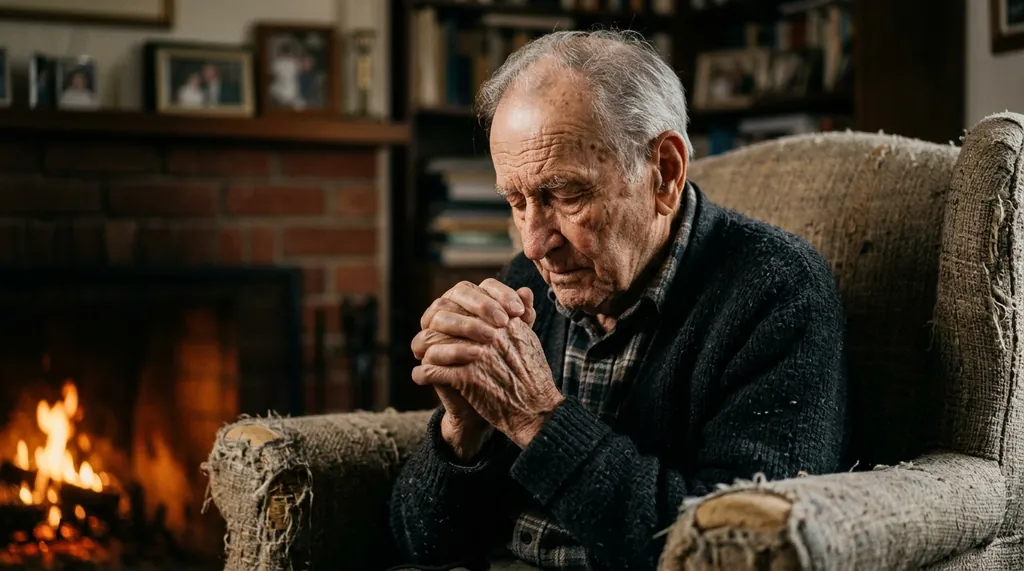
So here’s the challenge: after you pray, don’t say amen and don’t get up. Stay silent for sixty seconds, with your heart saying Samuel’s words: “Speak, Lord, for your servant is listening.” You may not hear an audible voice — most never do. But you may receive a verse that lights up in your mind, a conviction, an unexplainable peace, a memory with an answer inside it, a name that rises in your heart. Jesus said in John 10 that the sheep listen to the Shepherd’s voice — and that voice usually doesn’t come through the ears, but through the spirit, through the Word, through that quiet certainty in your chest. But you’ll never learn to recognize it if you never give it room to speak. Prayer is a conversation — and a conversation where only one person talks isn’t a conversation, it’s a performance. Stop performing. Start listening.
✅ How to fix mistake 5: after the amen, stay 60 seconds in silence before God, with your heart saying: “Speak, Lord, for Your servant is listening.”
Mistake 6 — Turning a deaf ear to God
This may be the most uncomfortable of the seven, because it exposes something we do with impressive frequency: we want God to hear us while we refuse to hear Him. And the Bible addresses this with shocking frankness. Proverbs 28:9: “If anyone turns a deaf ear to my instruction, even their prayers are detestable.” Read that again: detestable. Not weak, not ineffective — detestable. A prayer offered by someone who ignores God’s instructions rises to heaven like a foul smell. And Zechariah recorded the Lord’s own words (7:13): “‘When I called, they did not listen; so when they called, I would not listen,’ says the Lord.” There’s a principle of reciprocity in the spirit: the ear you give to God is the ear He gives to you. If you treat God’s words as suggestions, don’t be surprised when heaven treats yours the same way.

Jesus touched this wound in Luke 6:46: “Why do you call me, ‘Lord, Lord,’ and do not do what I say?” Calling Him Lord while ignoring His instructions is a contradiction: Lord means master — the one whose word is final. A lord whose orders are optional isn’t a lord at all; he’s just a name we use when we need something. And deep down, each of us knows what the last instruction God gave us was. Forgive that person. Drop that habit. Restore that relationship. Leave that situation. And you’ve been putting it off — weeks, months, maybe years — while continuing to pray for new blessings, with the old instruction untouched. My friend: God rarely gives the next instruction before you obey the previous one. As Psalm 32:9 says, don’t be like the horse or the mule, which need bit and bridle — God wants children who say yes.
And there’s the beautiful other side of the coin. 1 John 3:21-22 gives the inverse formula, the open secret of answered prayer: “If our hearts do not condemn us, we have confidence before God and receive from him anything we ask, because we keep his commands and do what pleases him.” Confidence in prayer grows in the soil of obedience. And Jesus said in John 15:7: “If you remain in me and my words remain in you, ask whatever you wish, and it will be done for you.” Notice the sequence: remaining comes before asking. Obedience isn’t a condition for earning God’s love — it’s the alignment that lets His power flow through a rightly connected life. Scripture applies this even to our most intimate relationships: 1 Peter 3:7 instructs husbands to treat their wives with honor so that nothing will hinder your prayers. The way you treat the person sleeping beside you may be the barrier between you and heaven.
So, one simple, piercing question: what was the last thing God told you to do? Some have been circling the same mountain for years, repeating the same prayer — and the door has been there all along, with a name written on it: the name of that act of obedience you’ve been avoiding. Turn your ears back to God and you’ll discover He never turned His away from you. The moment you listen, He listens.
✅ How to fix mistake 6: identify the last instruction God gave you — and obey it. The next answer comes after your “yes.”
Mistake 7 — Giving up too soon
Luke 18:1 tells us exactly why Jesus told the parable that follows: “to show them that they should always pray and not give up.” Luke, the meticulous historian, wrote the purpose before the story: always pray; don’t give up. There was a judge in a certain town who neither feared God nor cared about people — and a widow who came to him every day with the same plea: “Grant me justice.” A widow in that world had no status, money, influence, or voice. But she had one thing: she kept coming. Day after day. Until the judge gave in — not out of kindness, but because she wouldn’t stop. Then Jesus applied it: “And will not God bring about justice for his chosen ones, who cry out to him day and night? I tell you: he will see that they get justice, and quickly.” Get the logic? If a corrupt judge yields to a widow’s persistence, how much more will your Father, who loves you with an everlasting love, answer children who cry out day and night? The parable doesn’t teach that God gets annoyed by persistence — it teaches the opposite: persistence is the proof of faith, and heaven honors it.

Jesus reinforced it in Luke 11 with the friend at midnight: a man knocks on his neighbor’s door at dawn asking for three loaves of bread, and hears “don’t bother me, the door is already locked.” And Jesus said that even if the friend won’t get up out of friendship, he will get up because of the man’s boldness — and give him everything he needs. Heaven responds to bold, shameless persistence. And then came the words every believer has memorized: “Ask and it will be given to you; seek and you will find; knock and the door will be opened to you.” In the original language, these verbs carry continuous action: keep on asking, keep on seeking, keep on knocking. It’s the difference between knocking once and walking away — and knocking until the door opens.
And if you doubt that persistence matters to God, remember Daniel. In chapter 6, when a decree banned praying to any god but the king on pain of the lions’ den, Daniel went home and, three times a day, he got down on his knees and prayed, just as he had done before. His persistence wasn’t a reaction to the crisis — it was the habit of a lifetime. But the most comforting passage about “unanswered” prayers is in Daniel 10: after 21 days of praying, fasting, and no answer, a heavenly messenger appeared and said: “Daniel, do not be afraid. Since the first day that you set your mind to gain understanding and to humble yourself before your God, your words were heard, and I have come in response to them.” Since the first day. For 21 days, Daniel thought he was praying to a closed heaven — but the answer had been sent on day one; there was only resistance in the unseen realm. Here’s the revelation: delay is not denial. Silence is not absence. What looks like heaven’s silence may be heaven’s battle. The only prayer guaranteed to fail is the one you stop praying.
The Word commands this rhythm everywhere: “Pray continually” (1 Thessalonians 5:17); “Devote yourselves to prayer” (Colossians 4:2). And there’s the story of George Müller, of Bristol, England, in the 19th century: he built orphanages that cared for thousands of children without ever asking anyone for money — his only method was prayer. He knelt before empty tables in full faith, and the food came, time after time, for decades. And he did more: he picked five friends who didn’t know God and prayed for their salvation every day. The first was converted after 5 years; two more after 10 and 25 years; and the last two only after Müller’s death — more than 50 years after he started praying. And he never stopped. Now, honestly: what have you prayed about for two weeks and concluded God wasn’t listening? Compare that to 50 years — and to the widow who wouldn’t leave the courtroom. She got justice not because the judge was good, but because she didn’t give up. Your Father is good. How much more will He answer you, if you don’t give up?
✅ How to fix mistake 7: keep on asking, seeking, and knocking. Delay is not denial: your words have been heard since the first day.
The prayer that closes the seven doors
Here we are: the 7 prayer mistakes that keep God from hearing you — faith, sin, motives, forgiveness, listening, obedience, and perseverance. Before the final prayer, one request: send this article to one person right now. Just one. Someone who has been praying and feeling heaven’s silence — from your family group, your church, your WhatsApp contacts. Someone you love may be one of these seven mistakes away from reopening heaven over their own life.
And now, the most important moment. Find a quiet place. Close your eyes, if you can. And pray this prayer out loud, with all your heart — it addresses the seven mistakes, one by one, so that nothing stands between you and your Father:
Father, I come before You in Jesus’ name. And I come as I am, with an open heart and a sincere soul.
Lord, first of all, I choose faith. I believe that You exist and I believe that You reward those who seek You. Like that father in the Scriptures, I cry out: Lord, I believe — help my unbelief. Today I take my eyes off the waves and fix them on You, because You are greater than any storm in my life.
Second, Lord, search me. Search my heart the way only You can. If there is any sin I have hidden, cherished, or justified, I bring it into Your light right now. I don’t want to feed it anymore. I confess it, I renounce it, and I ask You to cleanse me. Create in me a pure heart, O God, and renew a steadfast spirit within me.
Third, Lord, purify my motives. Examine every desire of my heart. If what I have been asking for feeds my ego, transform my desires until they are in tune with Yours. I surrender my plans and pray the prayer of Your Son in the garden: not my will, but Yours be done. I prefer Your plan over my comfort.
Fourth, and this is the hardest one, Lord: forgiveness. You know every name that came to my mind during this reading. You know every wound, every betrayal, every word that still hurts. Today I take my hands off their lives. I release them from my own courtroom and place them in Your hands, because You are the perfect Judge. I choose to forgive — not because it was all okay, but because I was forgiven at the cross and I refuse to collect from others a debt You already canceled for me. Jesus, where my heart cannot, give me Your forgiveness. Fill me with the love I don’t feel and free me from the prison of my own bitterness.
Fifth, Lord, teach me to listen. From today on, my prayer will not be a monologue. Speak, Lord, for Your servant is listening. I will be still and know that You are God. Silence every noise around me and within me, and let me recognize Your whisper.
Sixth, Lord, I choose obedience. I remember what You have already told me, and I say yes. Give me courage to obey promptly, completely, and joyfully, so that nothing in my life hinders my prayers. I don’t just want to call You Lord — I want to live as if You are my Lord.
And seventh, Father, teach me to persevere. Give me the widow’s persistence, the boldness of the friend at midnight, and Daniel’s patience. When the answer takes long, remind me that delay does not mean denial and that my words have been heard since the first day. I will keep on asking, seeking, knocking. I will not give up, because You are a good Father who gives good gifts to His children.
Lord, hear this prayer. Reopen every heaven that has closed over my life. Restore my confidence before You. Heal my body, restore my family, provide for my home, and guide my steps from today on. I place my life, my heart, my ears, and my words in Your hands. In the name of Jesus Christ, I pray. Amen.
The final blessing — God hears you
Remember that woman from the beginning, kneeling beside her bed at midnight, whispering: “Does God really hear me?” Know this: God heard Daniel’s words on the first day, even when 21 days of silence said otherwise. He heard Hannah’s silent groaning when a priest mistook her for a drunk. He heard the seven-word prayer of a tax collector while a proud man’s eloquence echoed off the ceiling. He heard a dying criminal ask to be remembered — and welcomed him into paradise that very day. The question was never whether God hears your prayer. The question is whether we will remove the things we ourselves placed between our hearts and His.
Faith instead of doubt. Confession instead of hiding. Pure desires instead of selfish ones. Forgiveness instead of clenched fists. Listening instead of monologue. Obedience instead of hesitation. Perseverance instead of giving up. Remove these things and you’ll discover what the Word has been saying all along: His ear never lost its sharpness; His arm never grew short. Today, when you kneel, you won’t be praying into the void — you’ll be speaking to a Father who has been leaning toward you all along, waiting for this exact moment.
And if the enemy whispers tomorrow that God isn’t listening, answer with the words the angel spoke to Daniel — words that are now true about your life: “Since the first day you set your mind to seek and to humble yourself before your God, your words were heard.”
May the Lord bless you and keep you. May the Lord make His face shine upon you and be gracious to you. May the Lord turn His face toward you and give you peace. God has heard you. And from today on, you will know it. Amen.
🙏 Did this message touch your heart? Leave your AMEN in the comments below — and write the number of the mistake that spoke to you most (1 to 7). Your number could be someone else’s answer. And if this message blessed you, share it with someone who needs to hear that God hears them.
Visual summary: mind map of the 7 mistakes
Why doesn’t God hear my prayers?
The Bible points to common blockages: praying without faith (James 1:6), cherishing unconfessed sins (Psalm 66:18), selfish motives (James 4:3), unforgiveness (Mark 11:25), not listening to God, disobedience, and giving up too soon. God always hears, but these mistakes can block the answer.
What is the most common mistake in prayer?
The most common mistake is unforgiveness: praying while holding a grudge against someone. Jesus taught that we must forgive as we pray so the Father will also forgive us (Mark 11:25). Praying with clenched fists keeps God from filling our hands.
How can I know God is listening even in silence?
Delay is not denial. Daniel prayed 21 days with no answer, but the angel revealed that his words had been heard since the first day (Daniel 10:12). What looks like heaven’s silence may be heaven’s battle on your behalf.
What should I do when my prayer seems to go no higher than the ceiling?
Examine the 7 points: pray with faith, confess hidden sins, purify your motives, forgive those who hurt you, set aside silence to hear God, obey the last instruction He gave you, and persevere without giving up. Then pray the prayer that closes the seven doors, above.
How do I forgive someone who hurt me deeply?
Forgiveness isn’t a feeling you wait for — it’s an obedience you choose. Pray: “Jesus, I can’t forgive — give me Your forgiveness.” Forgiving doesn’t mean saying it was right, nor trusting again: it means taking the person out of your courtroom and handing them over to God’s courtroom (Romans 12:19). The feeling of relief comes after the decision.
What does “pray without ceasing” mean?
It doesn’t mean praying 24 hours nonstop, but keeping your heart in continual communion with God. Daniel prayed three times a day as the habit of a lifetime; the widow in Luke 18 went to the judge every day until she got justice. Perseverance in prayer is the proof of faith — and heaven honors it.